 Ancient3DCrafts
About
About The Ea-nasir Tablet
The Ea-nasir Tablet is a reference site and shop page run by Ancient3DCrafts, a small business in Richmond Hill, Ontario, Canada, that makes replicas of ancient objects. I'm Shane, and I run Ancient3DCrafts.
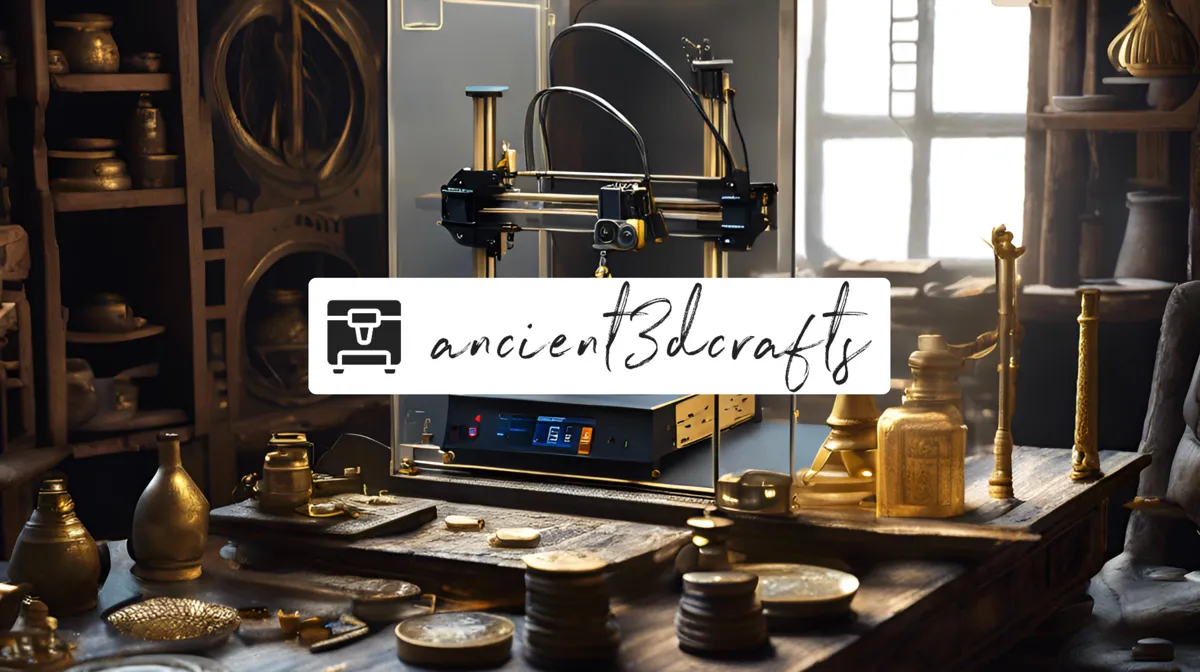
Why this site exists
The complaint tablet to Ea-nasir is a small clay letter with an outsized reputation. Most of what circulates about it online is a joke, a screenshot or a half-remembered fact, and some of it is simply wrong: the tablet was not found in 1953, the famous statue is not Ea-nasir, and the British Museum registration number is 1953,0411.71, not 1953,0411.1. This site collects what is actually known, with a source for every fact, alongside the replica we make. Start with the complaint tablet explained or who was Ea-nasir?
The replica
Our Ea-nasir complaint tablet replica is 11.5 × 5 × 2 cm, made from a solid clay-effect composite and finished by hand in the workshop pictured above. It is a modern replica for display and education, not an antiquity. Orders are handled through Etsy; see shipping and returns.
What we make
Ancient3DCrafts makes replicas of ancient objects and sells them through our Etsy shop. Besides the Ea-nasir tablet, the shop includes replicas of other ancient Near Eastern pieces such as the Code of Hammurabi stele, the Babylonian Map of the World, the Sumerian King List and the Cyrus Cylinder. This site covers just one of them, in depth.
Who writes the essays
The essays are researched and written by Shane at Ancient3DCrafts. We make replicas, so for the history we rely on the specialists: museum records, published editions and translations, all listed on each page. Where a page gives our own view, for example on what to look for in a replica, it says so, and the replica buying guide is open about which replica is ours.
Sister site
We also run The Roman Dodecahedron, a reference site on the Gallo-Roman dodecahedra and our cast-metal replica.
Sources and editorial policy
Facts about the original tablet come from museum records (the British Museum's collection database and UrOnline), scholarly editions (Archibab, the Cuneiform Digital Library Initiative), published translations and other cited sources, which are listed at the foot of every essay. Where sources disagree, for example on the find year or on how a name is read, the pages say so rather than picking one silently. We summarise translations in our own words and quote only short passages, with credit. Product facts come from our own listing.
How we research a page
Each essay starts from the primary records: the British Museum's catalogue entry for 131236, the UrOnline excavation record for U.16814a, and the Archibab edition of the text. We then read the published translations and the main secondary sources, and check popular claims against them. That is how we caught the common mix-ups about the find year and the registration number. Every page lists its sources with links, and quotations from translations are kept short and credited to their translators.
Corrections
If you spot an error or know a better source, email ancient3dcrafts@gmail.com. Corrections are checked against the source and fixed on the page, and the page's modified date is updated.
Photos
Photos of the replica are our own. Photos of the original tablet and of Ur and Dilmun are freely licensed images from Wikimedia Commons, credited under each image and listed on the image licence page. This site is not affiliated with the British Museum, UrOnline, Archibab or the Cuneiform Digital Library Initiative; we link to their records for reference only.
To get in touch for anything else, see the contact page. How this site handles email and Etsy orders is described on the privacy page.