 Ancient3DCrafts
Culture
Why Ea-nasir Became a Meme
Key points
- On 25 February 2015 a Reddit user posted a museum photo of the tablet titled “1750 BC problems”; another user added Oppenheim's translation.[1][2]
- The joke spread to Tumblr the same day and became one of the internet's longest-running history memes.[1][3]
- Guinness World Records lists the tablet as the oldest written customer complaint.[6]
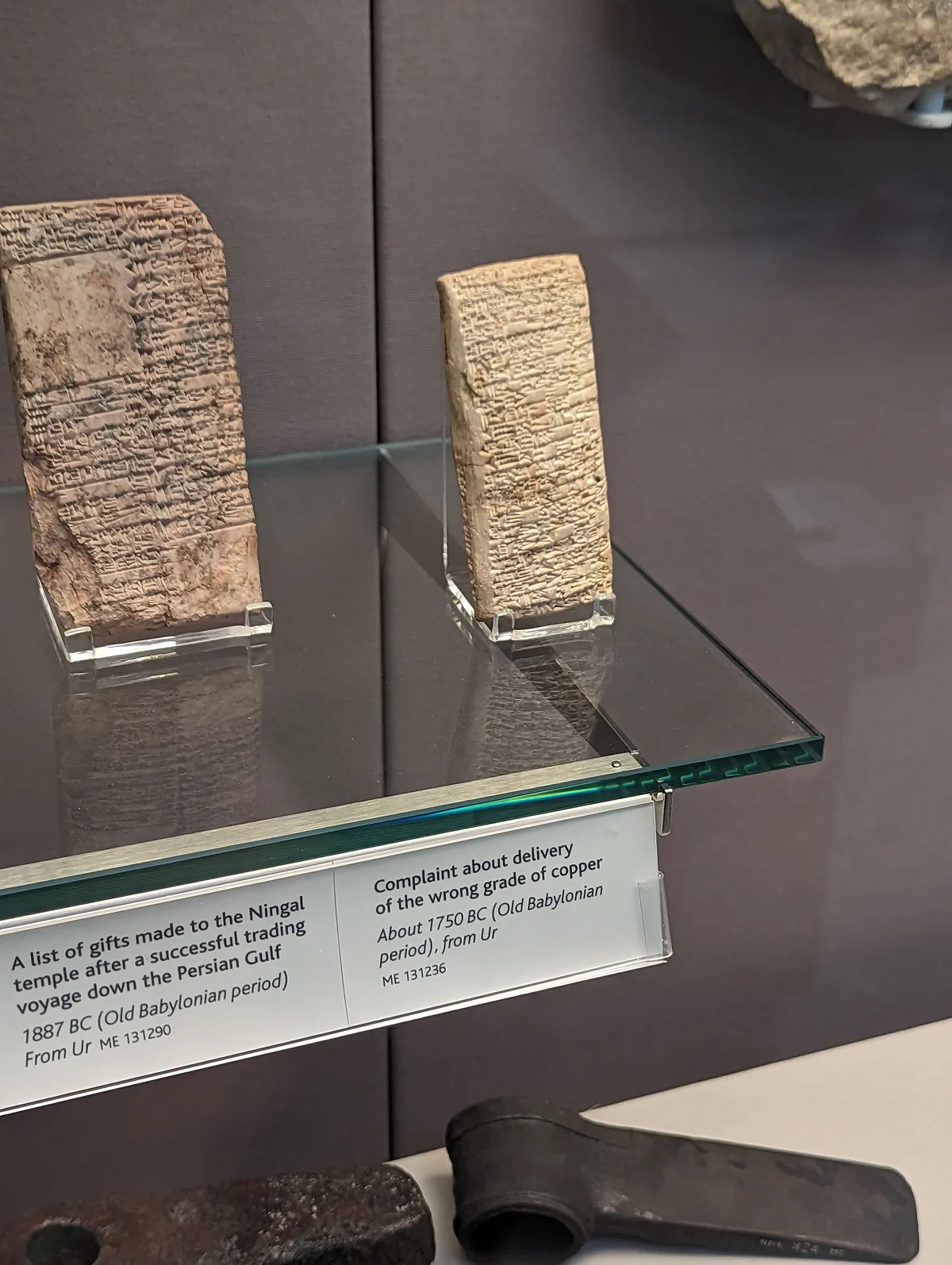
The post that started it
According to Know Your Meme, on 25 February 2015 Reddit user u/tbc34 posted a photo to r/pics of the tablet in its British Museum case, label visible, under the title “1750 BC problems”. Another user, u/labarna, replied with the English translation from A. Leo Oppenheim's 1967 Letters from Mesopotamia, and the thread took off.[1] Gizmodo wrote it up the next day.[2] The same photo went up on Tumblr that day too, where it eventually collected hundreds of thousands of notes.[1][3]
Why it worked
The joke lands because it feels anachronistic. Nanni sounds like someone writing a one-star review: a broken promise, a rude reply, a messenger turned away, a demand for a refund and a vow never to accept bad copper again.[4][5] The “take it or leave it” line reads like a modern customer-service brush-off.[6] It also helped that the archive contains other complaints to the same man, which turned Ea-nasir from a one-off into a recurring character with a reputation.[7] Our translation summary shows how much of the letter is genuinely furious.
How it spread
Over the next decade, Ea-nasir jokes mixed with every meme format going: fake product reviews, “fine quality copper” puns, messengers sent back empty-handed, and Ea-nasir as an archetypal scammer. A Facebook page dedicated to Ea-nasir memes launched on 30 April 2017.[1] Tumblr in particular became, in Cultural Property News's words, a haven of Ea-nasir comedy.[3] National Geographic and Guinness World Records have both written about the merchant and his reputation.[8][9]
Academics took notice
The meme is now a subject of research itself. Archaeologist Gabriel Moshenska of University College London studied it in the Journal of Contemporary Archaeology, arguing that it works mainly as an in-joke for online communities and that Ea-nasir has been turned into a “trickster” figure.[10] Wikipedia's article on Ea-nasir notes the same trickster image.[7]
Myths that came with it
Memes are not footnotes, and a few errors travel with the joke:
- The face. The bug-eyed statue used for Ea-nasir is a worshipper figure from the Tell Asmar hoard, about a thousand years older than him.[7]
- “Found in 1953.” That is the year of museum registration and publication; the excavation record places the find in 1930–31.[11][12]
- Trophy room. The idea that he displayed complaints as trophies has no evidence behind it. See who was Ea-nasir?
- On display. The tablet has been shown in the museum, but the online record currently lists it as not on display. See how to see it.[11]
The Guinness record
Guinness World Records lists the tablet as the “oldest written customer complaint”, describing a complaint about the wrong grade of copper and quoting Oppenheim's translation.[6] In a January 2026 article, Guinness called Nanni's letter the oldest of the merchant's one-star reviews.[9]
Owning a piece of the joke
Part of the meme's staying power is that the object is real and small enough to imagine holding. That's why we make the Ea-nasir tablet replica: a desk-sized reminder that bad service is nothing new. For gift ideas, see Ea-nasir gifts; if you are comparing replicas, the replica buying guide explains what to look for; for the real history behind the jokes, start with the complaint tablet explained.
FAQ
When did the Ea-nasir meme start?
On 25 February 2015, with a Reddit post titled “1750 BC problems”, according to Know Your Meme.
Is the Ea-nasir tablet really the oldest complaint?
Guinness World Records lists it as the oldest written customer complaint.
Is the Ea-nasir statue real?
The statue used in memes is real but unrelated: a Tell Asmar worshipper figure about a thousand years older.
Sources
- [1] Know Your Meme, “Complaint Tablet to Ea-nasir”
- [2] L. Davis, “This 1750 BC Babylonian Tablet Is An Ancient Customer Service Complaint,” Gizmodo, 26 Feb 2015
- [3] M. Hale, “The Internet's Favorite Sumerian,” Cultural Property News, 1 Sep 2024
- [4] A. Leo Oppenheim, Letters from Mesopotamia: Official, Business, and Private Letters on Clay Tablets from Two Millennia (University of Chicago Press, 1967), letter no. 12, pp. 82–83
- [5] Archibab (Collège de France), text T12972 = UET 5 81, “Lettre de Nanni à Ea-naṣir”, transliteration and translation
- [6] Guinness World Records, “Oldest written customer complaint”
- [7] Wikipedia, “Ea-nāṣir” (accessed Nov 2026)
- [8] National Geographic, “Meet Ea-Nasir, a shady ancient merchant—and modern meme”
- [9] E. Pilastro, “Angry customer demands refund: the odd story of the first customer complaint,” Guinness World Records, 30 Jan 2026
- [10] G. Moshenska, “The Legend of Ea-Naṣir: How a Babylonian Businessman Became an Internet Meme,” Journal of Contemporary Archaeology
- [11] British Museum, collection record: tablet, museum number 131236, registration 1953,0411.71
- [12] UrOnline (British Museum and Penn Museum), object record “16814A | 1953,0411.71”