 Ancient3DCrafts
History
Dilmun and the Copper Trade
Key points
- Dilmun was a Gulf trading power centred on modern Bahrain, with territory in eastern Arabia and Kuwait.[1]
- Mesopotamia had no copper of its own; much of it came from Magan (Oman and the UAE) by way of Dilmun's markets.[1][2]
- Ea-nasir was one of the Ur merchants who made the voyage, the alik Tilmun.[3][10]
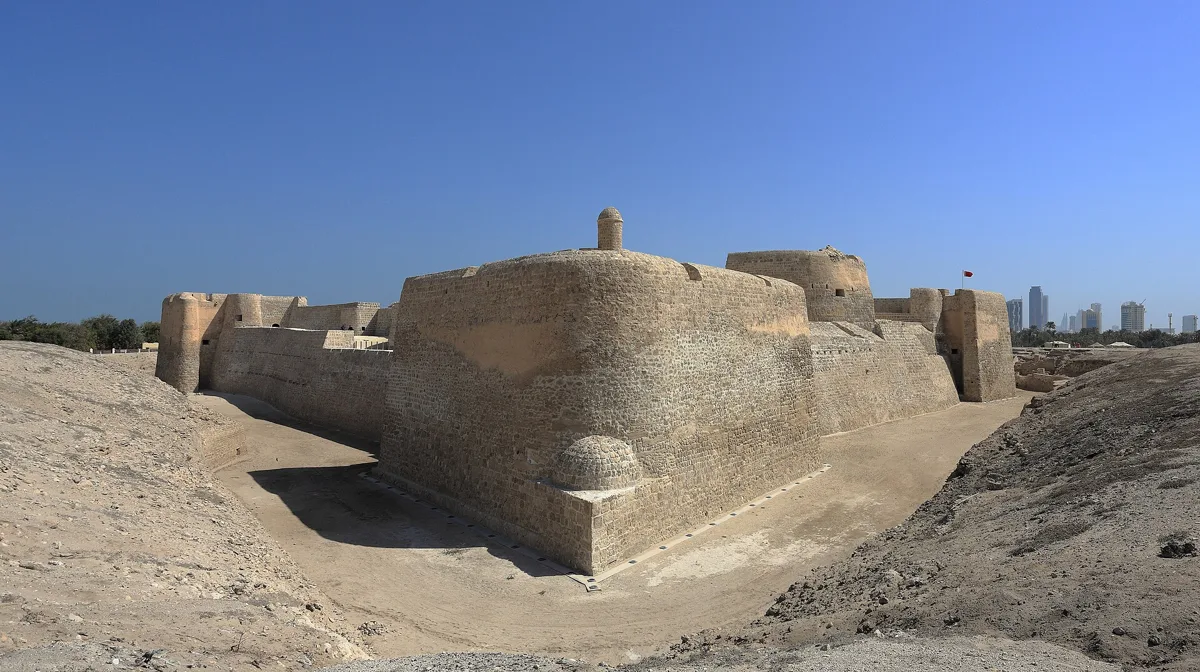
Where was Dilmun?
Dilmun (also Tilmun or Telmun) appears in Mesopotamian texts from the third millennium BC as a trading partner, a source of copper and an entrepôt. Modern scholars place it in the Gulf, covering Bahrain, Kuwait and eastern Saudi Arabia, with Qal'at al-Bahrain most likely its capital.[1] It sat on the sea route between Mesopotamia and the Indus Valley, and its weights and measures matched those of the Indus rather than southern Mesopotamia, a sign of how international its trade was.[1]
Dilmun seems to have been at its peak from around 2050 BC, with the largest royal burial mounds built in this period; a decline is visible from around 1720 BC.[1] That puts Ea-nasir's career near the end of Dilmun's golden age.
Why copper, and why from abroad?
Southern Mesopotamia was rich in clay, reeds and grain but had no metal ores. Copper, used for tools, weapons and, alloyed with tin, bronze, had to be imported.[1] Sumerian and Akkadian texts name Magan, in what is now Oman and the UAE, as a source of copper and diorite from around 2300 BC.[2] By the Isin-Larsa period, the era of Ea-nasir, Dilmun had come to dominate the trade, and Ur's merchants bought copper there rather than sailing to Magan themselves.[1][3]
How the trade worked
Texts from Ur describe merchants sailing down to Dilmun with Mesopotamian goods such as wool and crops, and coming back with copper, which fetched high prices at home, along with other luxuries.[1] Investors at Ur put up silver in advance; merchants like Ea-nasir bought copper in Dilmun and owed their backers metal of agreed quality on their return.[3][4] Nanni's letter shows the moving parts: silver handed over beforehand, messengers sent to collect, ingots inspected on delivery, and a sealed document lodged at the temple of Šamaš.[5]
Temples were part of the system too. One Old Babylonian tablet from Ur traders' archives lists gifts made to the temple of Ningal after a successful voyage to Dilmun, a thank-offering for a safe return.[6]
What was “good” copper?
The quarrel between Nanni and Ea-nasir is about grade. Copper ingots varied in purity, and an ingot that looked fine could yield less usable metal after refining. That is why Nanni insists he will select the ingots himself, one by one, in his own courtyard.[7][5] The British Museum's summary calls it the “wrong grade of copper ore”.[8] Our translation summary walks through the argument.
Risk on the road
Nanni twice mentions “enemy territory” or “foreign territory”: his agents had to cross it to reach Ea-nasir, and his money was being held there.[7][5] In the early 18th century BC, southern Mesopotamia was divided between rival kingdoms, including Larsa under Rim-Sîn I and Babylon under Hammurabi, so moving silver and metal between cities was genuinely risky.[9]
Seeing Dilmun today
Qal'at al-Bahrain is a UNESCO World Heritage Site, and the Bahrain National Museum has galleries on Dilmun.[1] Ur itself, with its restored ziggurat, lies near Nasiriyah in southern Iraq; see Woolley's excavation of Ur. To understand the merchant at the centre of the story, read who was Ea-nasir?, or hold a piece of the story with the Ea-nasir tablet replica.
FAQ
Where was Dilmun?
In the Gulf, centred on modern Bahrain and including parts of eastern Arabia and Kuwait.
Where did Ea-nasir's copper come from?
Probably from Magan (modern Oman and the UAE), bought through Dilmun's markets.
Who were the alik Tilmun?
The 'Dilmun traders', merchants of Ur who sailed to Dilmun to buy copper; Ea-nasir was one of them.
Sources
- [1] Wikipedia, “Dilmun” (accessed Nov 2026)
- [2] Wikipedia, “Magan (civilization)” (accessed Nov 2026)
- [3] Wikipedia, “Ea-nāṣir” (accessed Nov 2026)
- [4] W. F. Leemans, Foreign Trade in the Old Babylonian Period (Leiden: Brill, 1960), pp. 39–40
- [5] Archibab (Collège de France), text T12972 = UET 5 81, “Lettre de Nanni à Ea-naṣir”, transliteration and translation
- [6] UrOnline (British Museum and Penn Museum), object record “16814A | 1953,0411.71”
- [7] A. Leo Oppenheim, Letters from Mesopotamia: Official, Business, and Private Letters on Clay Tablets from Two Millennia (University of Chicago Press, 1967), letter no. 12, pp. 82–83
- [8] British Museum, collection record: tablet, museum number 131236, registration 1953,0411.71
- [9] Wikipedia, “Rim-Sîn I” (accessed Nov 2026)
- [10] Wikipedia, “Complaint tablet to Ea-nāṣir” (accessed Nov 2026)