 Ancient3DCrafts
Archaeology
Leonard Woolley's Excavation of Ur
Key points
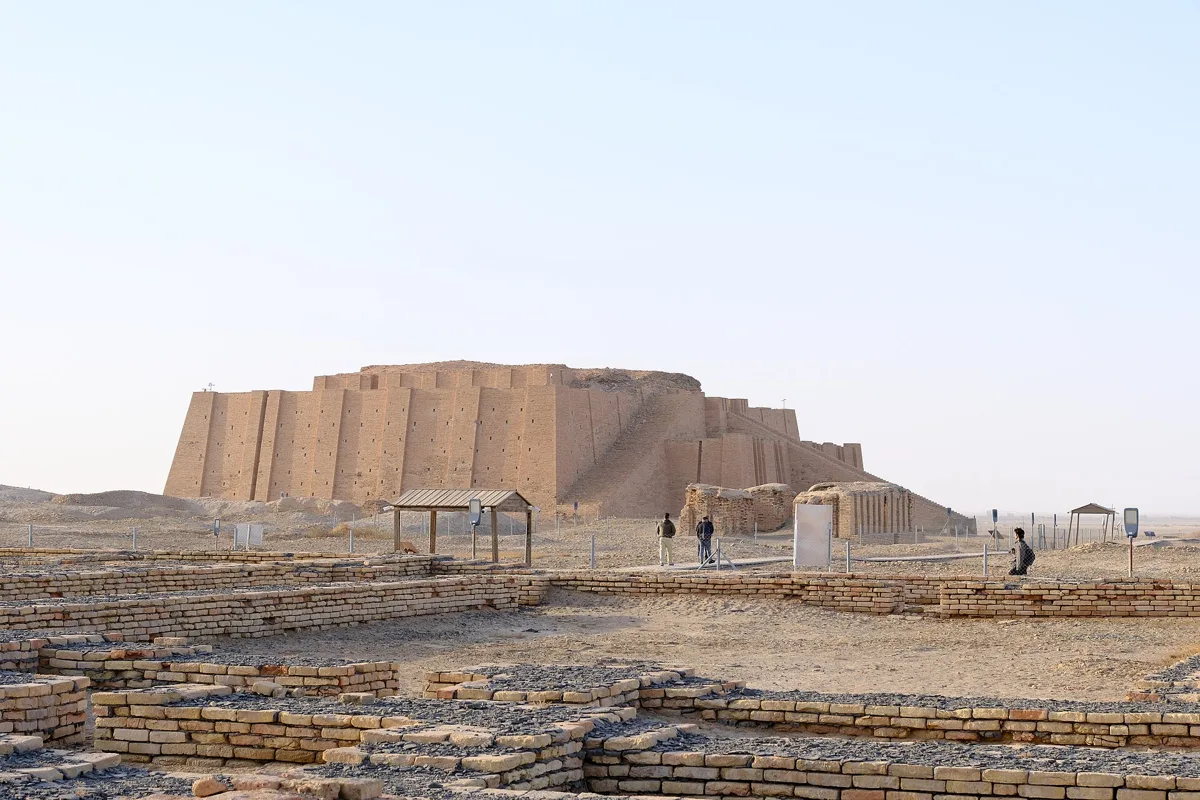
The city of Ur
Ur, today Tell al-Muqayyar near Nasiriyah in southern Iraq, was one of the oldest and most important cities of Mesopotamia, sacred to the moon god Nanna. It once stood on the Euphrates, but the river shifted away and the city was eventually abandoned; the site now lies some six miles from the river.[1][2] By Ea-nasir's time Ur was no longer an imperial capital, but it was still a busy port city whose merchants traded down the Gulf.[2][3]
The joint expedition
After the First World War, the British Museum and the University of Pennsylvania Museum formed a partnership to dig at Ur under Charles Leonard Woolley (1880–1960). It was the first excavation carried out under a permit from the new state of Iraq, and the permit agreed that half the finds would go to the future Iraq Museum in Baghdad, with the rest divided between London and Philadelphia.[1][4] The work ran for twelve seasons, from 1922 to 1934.[5]
Woolley is remembered as one of the first archaeologists to dig methodically and keep careful records. He was knighted in 1935. His team included his wife, the archaeologist Katharine Woolley, and his assistant Max Mallowan, who married the novelist Agatha Christie after she visited the dig in 1930.[6]
Royal tombs and private houses
The Ur excavations are most famous for the Royal Cemetery, with treasures such as the Ram in a Thicket figures and the bull-headed lyre, and for the great ziggurat complex.[6][5] But Woolley also cleared densely packed private houses of the Old Babylonian period, with streets he gave English names such as Old Street, and published them with Mallowan in the 1976 report The Old Babylonian Period.[5][7][8]
These houses produced archives of letters and contracts. Ea-nasir's archive is linked by Archibab to the house at No. 1 Old Street in the area Woolley called AH.[9] The tablet's own catalogue card gives the context as “House 4 (Chapel) A.H” and the season as the ninth, 1930–31.[10] More on the man who lived there in who was Ea-nasir?
From Ur to London
Nanni's letter was allocated to the British Museum in the division of finds with Iraq's Department of Antiquities and registered there in 1953 as 1953,0411.71, alongside many other Ur tablets with registration numbers in the same 1953,0411 series.[11] The texts were published that year by H. H. Figulla and W. J. Martin as Ur Excavations Texts V, where Nanni's letter is no. 81.[11][9] That explains why the year 1953 appears in many accounts of the tablet, sometimes wrongly given as the year it was found. See the complaint tablet explained.
Woolley's records online
Woolley's field notes, photographs and catalogue cards were split across three museums. After the looting of the Iraq Museum in 2003, the British Museum and Penn Museum set out to bring their Ur records together, and from 2012 to 2015 they built UrOnline, an open database that links objects, photographs and documents.[1][4] UrOnline's entry for this tablet is where the excavation number U.16814a and the season come from.[10]
The British Museum's own online record is the place to check before a visit; how to see the Ea-nasir tablet explains how.
Ur today
In 2015, a new team of American, British and Iraqi archaeologists led by Elizabeth Stone and Paul Zimansky returned to Ur for the first time since Woolley left in 1934, re-examining areas first dug in 1930.[4] For the trade that connected Ur to the Gulf, read Dilmun and the copper trade; for the script on Woolley's tablets, see how cuneiform works. Or start with the object itself: our Ea-nasir tablet replica.
FAQ
When was Ur excavated?
Leonard Woolley's joint British Museum and Penn Museum expedition dug at Ur from 1922 to 1934.
When was the Ea-nasir tablet found?
UrOnline places it in the ninth season, 1930–31. It was registered at the British Museum in 1953.
Where are the Ur finds now?
Half went to the Iraq Museum in Baghdad; the rest were divided between the British Museum and the Penn Museum.
Sources
- [1] UrOnline, “The UrOnline Project”
- [2] Wikipedia, “Ur” (accessed Nov 2026)
- [3] Wikipedia, “Dilmun” (accessed Nov 2026)
- [4] W. B. Hafford, “City of the Moon: New Excavations at Ur,” Expedition (Penn Museum), 2017
- [5] UrOnline, home page: excavations at Ur 1922–1934
- [6] Wikipedia, “Leonard Woolley” (accessed Nov 2026)
- [7] L. Woolley and M. Mallowan, The Old Babylonian Period, Ur Excavations VII (London: British Museum Publications, 1976)
- [8] Wikipedia, “Ea-nāṣir” (accessed Nov 2026)
- [9] Archibab (Collège de France), text T12972 = UET 5 81, “Lettre de Nanni à Ea-naṣir”, transliteration and translation
- [10] UrOnline (British Museum and Penn Museum), object record “16814A | 1953,0411.71”
- [11] British Museum, collection record: tablet, museum number 131236, registration 1953,0411.71