 Ancient3DCrafts
The text
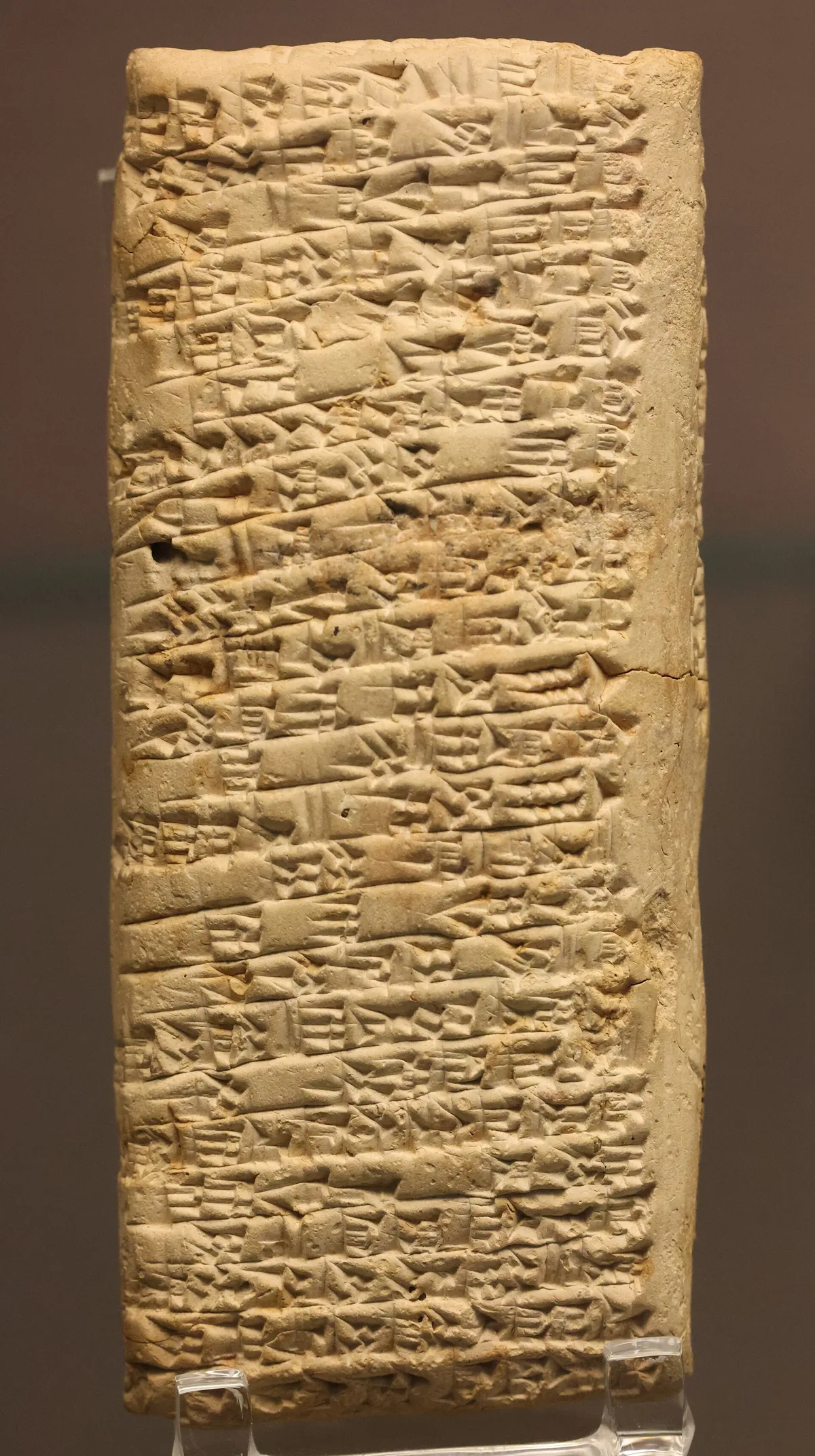
Ea-nasir Tablet Translation: What Nanni's Letter Says
Key points
- Nanni says Ea-nasir promised good copper ingots, then offered his messenger bad ones on a take-it-or-leave-it basis.[8][6]
- He complains that his agents were sent home empty-handed through hostile territory and demands his money back in full.[8][6]
- The best-known English translation is A. Leo Oppenheim's, in Letters from Mesopotamia (1967), letter no. 12.[2][8]
Which translation?
The letter has been translated several times. Oppenheim translated some lines in a 1954 article; W. F. Leemans published a full English translation in 1960; Oppenheim's own complete version appeared in his 1967 anthology Letters from Mesopotamia, as letter no. 12 on pages 82–83. A Russian translation by I. M. Diakonoff followed in 1990 and another English version in 2010.[1][2] Oppenheim, an Austrian-American Assyriologist, was editor-in-charge of the Chicago Assyrian Dictionary from 1955 to 1974.[3]
The summary below follows the structure of the text and credits Oppenheim's 1967 translation, the version quoted by the British Museum's bibliography, Guinness World Records and Archaeology magazine.[2][4][5] We quote only a few short phrases; for the full wording, see Oppenheim's book or the line-by-line edition on Archibab.[6] For the object itself, its museum numbers and findspot, see the complaint tablet explained.
Lines 1–3: the address
The letter opens with the standard Old Babylonian formula: “To Ea-nasir speak; thus says Nanni.” The scribe writes it as a-na é-a-na-ṣi-ir / qí-bí-ma / um-ma na-an-ni-ma.[6] Letters were dictated to a scribe and read aloud to the recipient, which is why they start by telling the reader what to say. Notice what is missing: Nanni adds no greeting or blessing, a snub scholars have commented on.[7] Learn the formula in how to read the Ea-nasir tablet.
The broken promise
Nanni reminds Ea-nasir that when he left, he promised to hand good-quality ingots to Nanni's man, named Gimil-Sin in Oppenheim's reading and Igmil-Sin in Archibab's.[8][6] Instead, Ea-nasir set poor ingots before Nanni's messenger and, in Oppenheim's translation, said: “If you want to take them, take them; if you do not want to take them, go away!”[8][4] That line is the heart of the meme.
“What do you take me for?”
Nanni then lets loose. He asks what Ea-nasir takes him for, to treat someone like him with such contempt.[8] He says he sent gentlemen as messengers to collect his money bag, and that Ea-nasir sent them back empty-handed more than once, through enemy territory. He asks whether any other merchant who trades with Dilmun (Telmun in Oppenheim, Tilmun in other editions) has ever treated him this way, and accuses Ea-nasir of treating his messenger with contempt.[8][6]
The copper for the palace
On the reverse, Nanni brings up money. Ea-nasir seems to have complained about one mina of silver; Nanni answers that, on Ea-nasir's behalf, he gave the palace 18 talents of copper, and that a man named Šumi-abum gave the same, apart from a deal recorded on a sealed document kept in the temple of Šamaš, the sun god.[6][8] Oppenheim converts the 18 talents to 1,080 pounds of copper.[4] The cuneiform here mixes syllables with Sumerian word-signs: “18 GÚ URUDU”, literally “18 talents of copper”.[6]
The demand and the threat
Nanni accuses Ea-nasir of holding back his money in hostile territory and says it is now up to him to repay it in full. From now on, he writes, he will not accept copper that is not of good quality: he will pick out the ingots one by one in his own courtyard and exercise his right of rejection, because he has been treated with contempt.[8][6] The British Museum's summary also notes complaints about the misdirection and delay of a further delivery.[2]
This demand for proper goods and a fair deal is why the letter is so often read as the oldest one-star review; see why Ea-nasir became a meme.
Key terms
| Term | Meaning |
|---|---|
| Dilmun / Tilmun / Telmun | The Gulf trading centre, centred on modern Bahrain, through which copper reached Ur[9] |
| Ingot | A cast bar or lump of copper, the unit in which copper was traded[6] |
| Mina, talent | Units of weight; a talent was 60 minas, which is how Oppenheim's 18 talents become 1,080 pounds[4] |
| Šamaš | The sun god, also god of justice; written ᵈUTU[6] |
| Sealed document | A contract tablet sealed by the parties and deposited for safekeeping[6] |
For the people and places behind the letter, read who was Ea-nasir? and Dilmun and the copper trade. To see the text in your hand, the Ea-nasir tablet replica reproduces the inscribed front face of the tablet at close to life size (the back and edges are not reproduced).
FAQ
Who translated the Ea-nasir tablet?
Several scholars. The best-known English version is A. Leo Oppenheim's in Letters from Mesopotamia (1967); W. F. Leemans published a full English translation in 1960.
What language is the tablet written in?
Akkadian, written in cuneiform.
Does Nanni ask for a refund?
Yes. He demands that Ea-nasir return his money in full and says he will reject poor copper in future.
Sources
- [1] Wikipedia, “Complaint tablet to Ea-nāṣir” (accessed Nov 2026)
- [2] British Museum, collection record: tablet, museum number 131236, registration 1953,0411.71
- [3] Wikipedia, “A. Leo Oppenheim” (accessed Nov 2026)
- [4] Guinness World Records, “Oldest written customer complaint”
- [5] Archaeology Magazine, “The World's Oldest Writing: Letters,” May/June 2016
- [6] Archibab (Collège de France), text T12972 = UET 5 81, “Lettre de Nanni à Ea-naṣir”, transliteration and translation
- [7] Wikipedia, “Ea-nāṣir” (accessed Nov 2026)
- [8] A. Leo Oppenheim, Letters from Mesopotamia: Official, Business, and Private Letters on Clay Tablets from Two Millennia (University of Chicago Press, 1967), letter no. 12, pp. 82–83
- [9] Wikipedia, “Dilmun” (accessed Nov 2026)